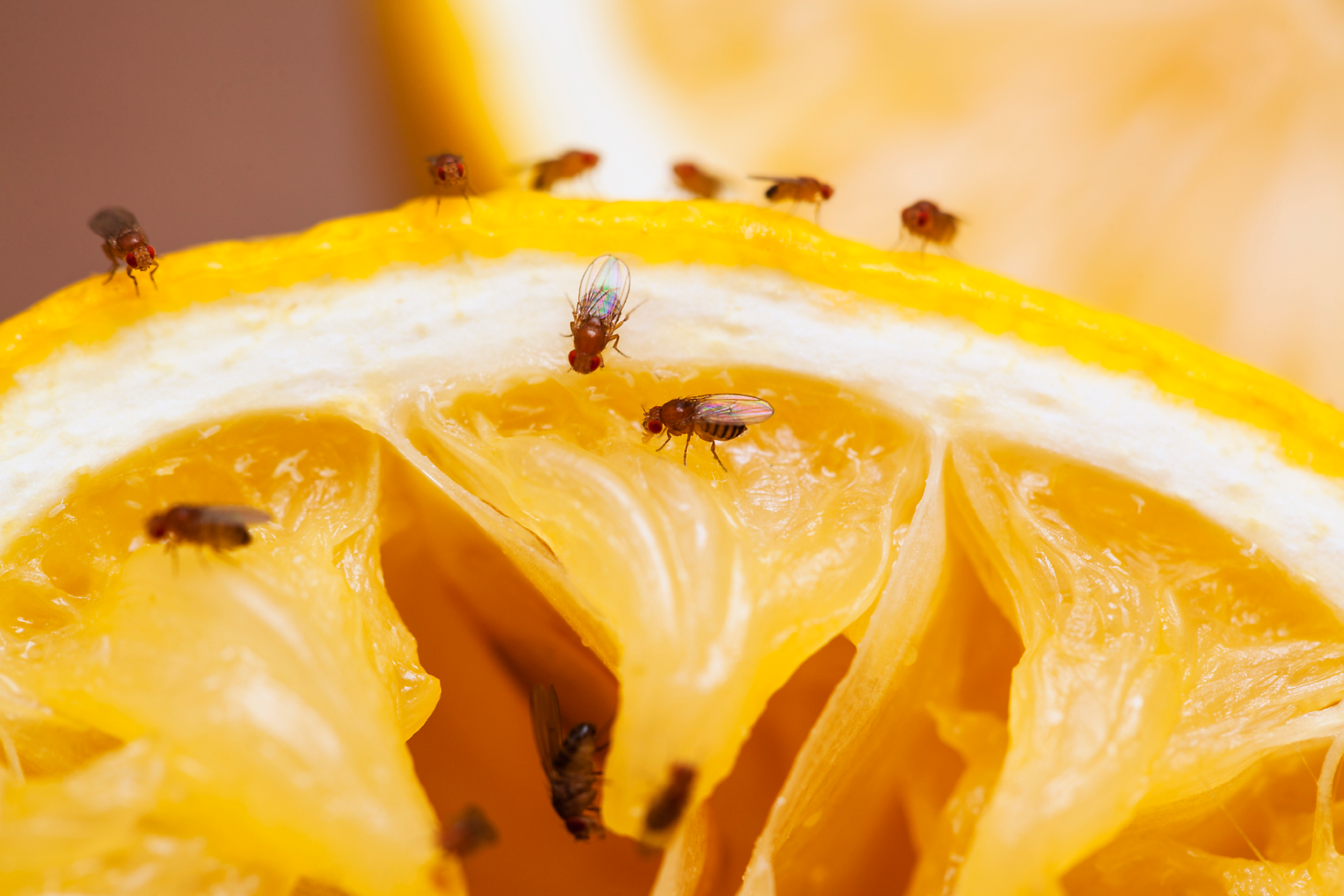
If fruit flies keep showing up in your SC or NC kitchen, there's a good reason. The Carolinas grow some of the best produce in the country, and fruit flies love it just as much as we do. South Carolina ranks second in the nation for peach production, ahead of Georgia despite Georgia's "Peach State" nickname, and North Carolina is the country's top sweet potato producer. When that kind of produce sits on a counter on a warm Carolina afternoon, fruit flies don't need an invitation. Here's what's really attracting them, which DIY traps are worth your time, and how to tell a fruit fly problem from a fungus gnat or drain fly situation before you try the wrong fix.
Key Takeaways:
- Fruit flies are attracted to ripening and fermenting produce, sugary residue in drains and trash, and empty bottles or containers with liquid left inside.
- A female fruit fly can lay up to 500 eggs in her lifetime, and a fruit fly can go from egg to adult in about a week – which is why infestations seem to appear out of nowhere.
- The apple cider vinegar trap works because dish soap breaks the liquid's surface tension, trapping flies that land on it; plain vinegar is less effective because it doesn't mimic fermenting fruit closely enough.
- Fruit flies, fungus gnats, and drain flies are three different problems that need three different fixes.
Why Fruit Flies Love Carolina Kitchens
Fruit flies aren't random. They're drawn to specific smells. Fermenting and ripening produce is the primary attractant: overripe bananas, peaches sitting on the counter past their peak, and even a small amount of fruit juice left in a glass are enough to pull them in. In the Carolinas, where peach season runs from mid-May through August and summer produce is abundant, the overlap between peak fruit season and peak fruit fly season is no coincidence.
But produce isn't the only draw:
- Drains and garbage disposals – food residue that accumulates in drains is a breeding ground, not just an attractant
- Trash cans – even a rinsed can with residual sugars from fruit or juice will attract them
- Empty bottles and containers – a wine bottle with a few drops left, a recycling bin with unwashed cans, a kombucha jar – any container with fermented sugar residue works
- Damp mops and sponges – anything holding organic moisture can become a secondary source
Is It Really a Fruit Fly? Fruit Fly vs. Fungus Gnat vs. Drain Fly
Treating the wrong insect wastes time and gets you nowhere, so a quick ID check is worth it before you set a single trap.
Fruit fly: Small, about ⅛ to ⅕ of an inch, with a stocky, rounded tan or brownish body. The key identifier is the eyes: fruit flies have distinctive red eyes that are visible up close. If you see tiny flying insects hovering around your produce bowl or compost, and you can spot red eyes on them, you have fruit flies.
Fungus gnat: Thinner and longer-legged than a fruit fly, with a darker body and no red eyes. Fungus gnats come from over-watered houseplants, not food; the larvae feed on fungi in damp soil. If your mystery bugs are near your plants rather than your kitchen counter, fungus gnats are the more likely culprit.
Drain fly: Tiny, with fuzzy, moth-like wings and a tendency to stay very close to drains or sitting water. Drain flies breed in the organic film inside pipes and tend to cluster near sinks and bathrooms rather than produce.
The fix for each one is different, so getting this right first matters.
Why Fruit Fly Infestations Explode So Fast
You left out one peach on a Tuesday. By Friday there seem to be dozens of fruit flies. This isn't your imagination, it's basic biology. A female fruit fly can lay up to 500 eggs over her lifetime, and the entire cycle from egg to reproducing adult takes roughly a week under warm conditions. The Carolinas' long, warm growing season means indoor temperatures stay favorable for faster breeding for more months of the year than in colder climates.
The math compounds quickly: a handful of adult flies can become hundreds within two to three weeks if the food source isn't removed. That's also why cleaning up the attractant is always the first step.
DIY Traps That Actually Work
Once the attractant is removed, these traps help eliminate the adults that remain:
Apple cider vinegar trap
Fill a small glass or jar about a third of the way with apple cider vinegar and not plain white vinegar, which doesn't mimic fermenting fruit closely enough to be effective. Add two or three drops of dish soap and stir gently. The apple cider vinegar draws the flies in; the dish soap breaks the liquid's surface tension so they sink rather than skating across the surface and flying away. Cover with plastic wrap held by a rubber band, and poke a few small holes so flies can enter. Leave near the problem area and check daily.
Fruit trap
Place a small piece of overripe fruit in a jar, cover tightly with plastic wrap, and poke small holes in the wrap. Flies enter to get to the fruit and can't find their way back out. Empty and reset every day or two.
Drain flush
If drain flies or fruit flies are breeding in your garbage disposal or sink drain, pour boiling water down the drain once a day for several days to break up the organic film where they're laying eggs. Follow with a scrub using a drain brush if accessible.
Preventing Fruit Flies for Good
Traps handle the adults. Prevention handles the next wave:
- Store ripe and overripe produce in the fridge rather than on the counter, especially peaches, bananas, and anything past peak
- Rinse all recyclables before they go in the bin. A single unwashed juice bottle is enough to sustain a fruit fly population
- Keep trash cans covered and take them out frequently during warm months
- Clean drains regularly, especially the garbage disposal; a weekly flush with boiling water goes a long way
- Wipe down counters and the inside of cabinets where produce is stored, and don't leave damp sponges or dish rags sitting out
When to Call a Professional
Most fruit fly problems resolve within a week or two once the food source is eliminated and traps are in place. When they don't, when flies keep appearing despite a clean kitchen and consistent trap use, there's usually a hidden breeding source that's harder to reach. A floor drain, a slow leak under the sink, or a cracked drain line can sustain a fruit fly population indefinitely regardless of how clean the counter is. Terminix Service, Inc. pest control specialists can locate the source and apply professional-grade treatment to eliminate it. Request your free inspection if the problem isn't resolving on its own.
Fruit Fly FAQs
What's the difference between a fruit fly and a fungus gnat?
Fruit flies are stockier with red eyes and hover around produce and food residue, while fungus gnats are thinner, darker, have no red eyes, and come from over-watered houseplants rather than food; getting this distinction right matters because the fixes are completely different.
Why does the apple cider vinegar trap work better than plain vinegar?
Apple cider vinegar more closely mimics the smell of fermenting fruit, which is what actually draws fruit flies in; the dish soap breaks the liquid's surface tension so flies that land on it sink rather than skating across and escaping.
Can fruit flies actually breed in my drain?
Yes, food residue and organic film inside garbage disposals and drain pipes is a common breeding ground, which is why fruit flies sometimes persist even after produce is cleaned up; a daily boiling water flush for several days helps break the cycle.
How long does it take to get rid of fruit flies?
With the attractant removed and traps in place, most infestations resolve within one to two weeks. The traps handle the adult population while the breeding cycle winds down without a food source to sustain it.
Do fruit flies bite?
No, fruit flies don't bite, sting, or transmit disease; they're a kitchen nuisance, not a health threat, though they can contaminate food surfaces they land on.
Why do I keep getting fruit flies even when my kitchen is clean?
A hidden breeding source is almost always the cause: a slow drain leak, a floor drain with organic buildup, or residue inside a recycling bin that looks clean from the outside. A professional inspection can find what you're missing.
Are fruit flies worse in summer in NC and SC?
Yes, the Carolinas' long, warm growing season means more ripe produce in more homes for more months of the year, and indoor temperatures stay warm enough for the fruit fly life cycle to run faster and longer than in colder climates.
Is a fruit fly trap from the store worth buying?
Most commercial fruit fly traps use the same basic mechanism as the DIY apple cider vinegar trap: an attractant and a way to prevent escape, so the homemade version works just as well at a fraction of the cost.

