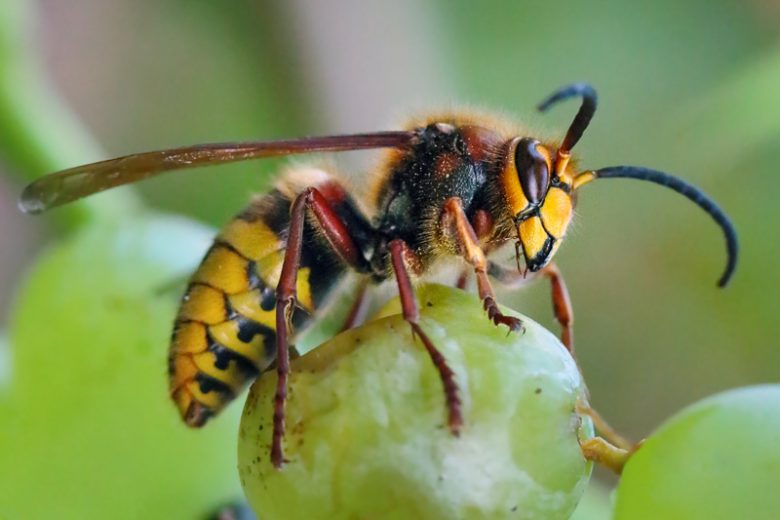
Not sure if that's a bee, a wasp, or a hornet buzzing around your yard in Greenville, Columbia, or the foothills outside Asheville? You're not alone – even the word "hornet" gets misapplied more often than not in the Southeast. The large grey football-shaped nest in your eave? Almost certainly not made by a true hornet. The big black bee drilling holes in your deck? Not a bee at all. Here's a visual guide to the stinging insects you're most likely to encounter in South Carolina and North Carolina: what they look like, how they behave, and when they actually pose a risk.
Key Takeaways:
- Bees are generally fuzzy; wasps are slender and smooth. That's the fastest visual rule for telling them apart.
- The bald-faced "hornet" is technically a yellowjacket, not a true hornet; the European hornet is the only true hornet established in North America.
- The great black wasp is one of the most commonly misidentified stinging insects in the Carolinas and one of the most harmless.
- Carpenter bees look nearly identical to bumblebees, but the smooth, matte black abdomen gives them away.
- The stinging insects that pose the greatest risk are the ones that live in colonies, because they defend a shared nest, not just themselves.
Bee, Wasp, or Hornet? The Fast Way to Tell Them Apart
Before diving into individual species, a few quick visual rules help narrow things down:
Bees are typically stocky and fuzzy. That body hair is what collects pollen. They feed on flowers and are generally not interested in your food or drink.
Wasps are slender, smooth-bodied, and have a distinct narrowing between the thorax and abdomen. They're built for hunting or scavenging, not pollen collection. Most of the stinging insects bothering you at a late-summer cookout are wasps, not bees.
Hornets are simply large wasps. In everyday use the word gets applied to anything big and frightening, but taxonomically only one true hornet species exists in North America and most things Carolinians call hornets are actually yellowjackets.
Types of Bees You'll Find in SC & NC
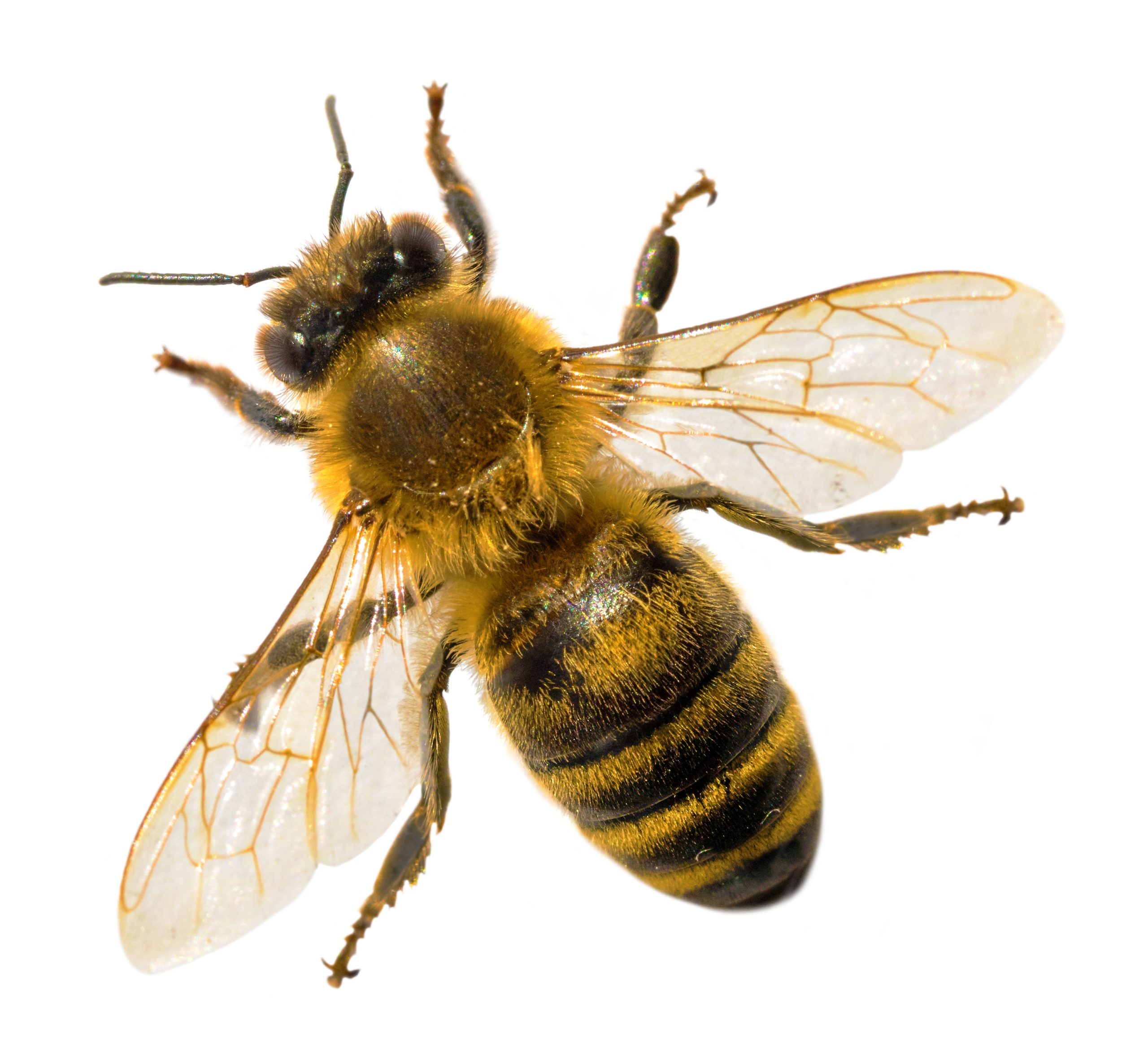
Honey Bee
Golden-amber with dark stripes and a fuzzy, rounded body, slightly smaller than a bumblebee. Honey bees live in large, year-round colonies and are the only bee species in the Carolinas that produces honey. They're not aggressive away from the hive but will defend it actively if disturbed. If you find a honey bee swarm or established hive in a structure, contact a local beekeeper before calling for extermination; live removal and relocation is often possible and worth pursuing first.
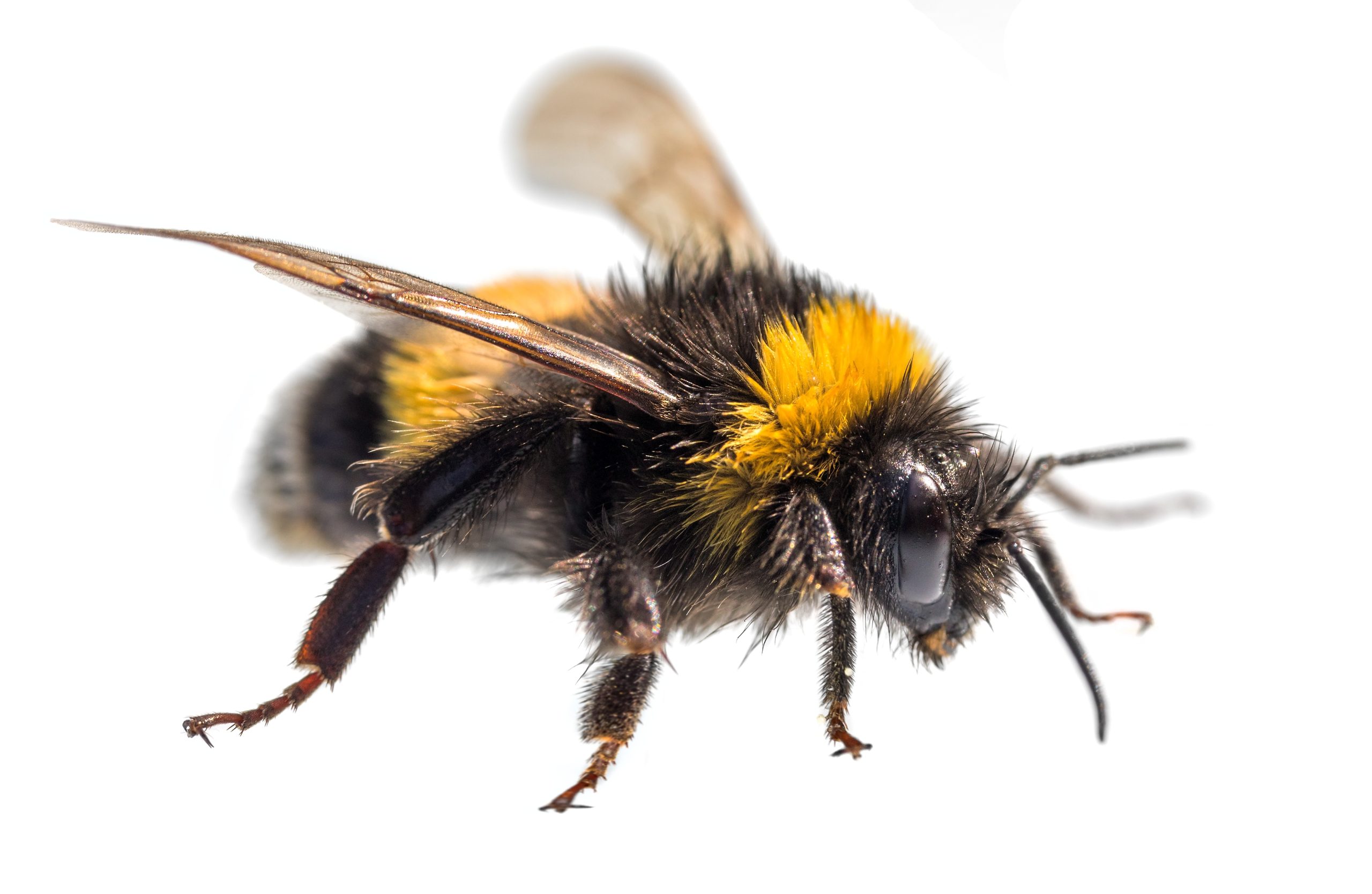
Bumblebee
Large, round, and very fuzzy and entirely black and yellow with a wide, hairy abdomen. Bumblebees live in small underground colonies or dense grass and are important native pollinators. They're gentle unless their nest is directly disturbed. The quickest distinction from a carpenter bee: bumblebees are fuzzy all the way around, including the abdomen.
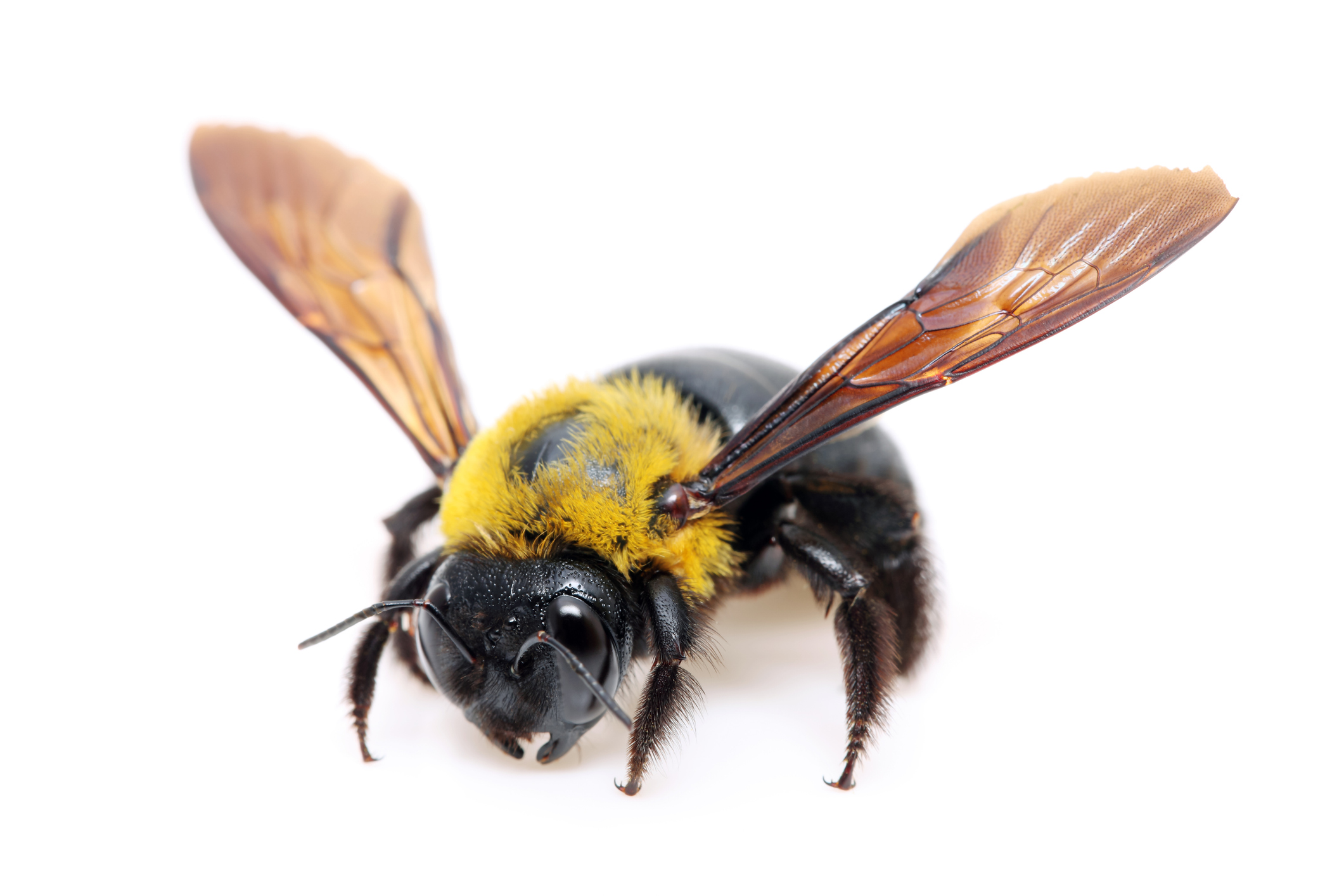
Carpenter Bee
Similar in size to a bumblebee but with a smooth, shiny, matte black abdomen rather than a fuzzy yellow one, that's the fastest ID. Carpenter bees are loners; each female drills her own perfectly round hole in exposed softwood to nest each spring and fall. Decks, fascia boards, wooden siding, and outdoor furniture are common targets. Males hover aggressively near entry holes but have no stinger; females can sting but almost never do. The real concern is structural – repeated nesting in the same wood over multiple seasons causes cumulative damage.
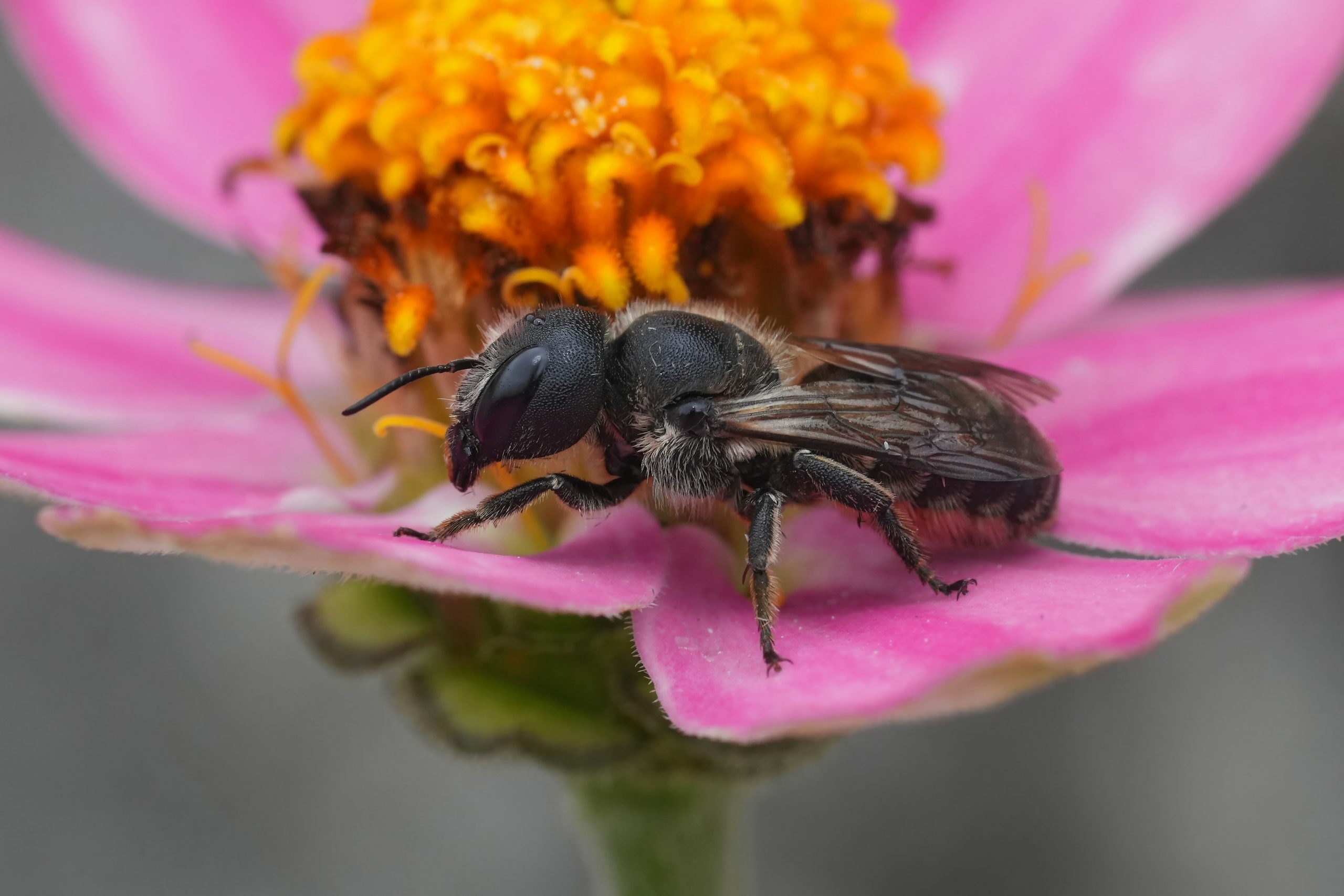
Mason Bee
Small and metallic blue-black, easy to overlook. Mason bees nest alone in small crevices and hollow plant stems rather than building large colonies, which means there's nothing to defend and they almost never sting. They're among the most effective native pollinators in the region and rarely a pest concern.
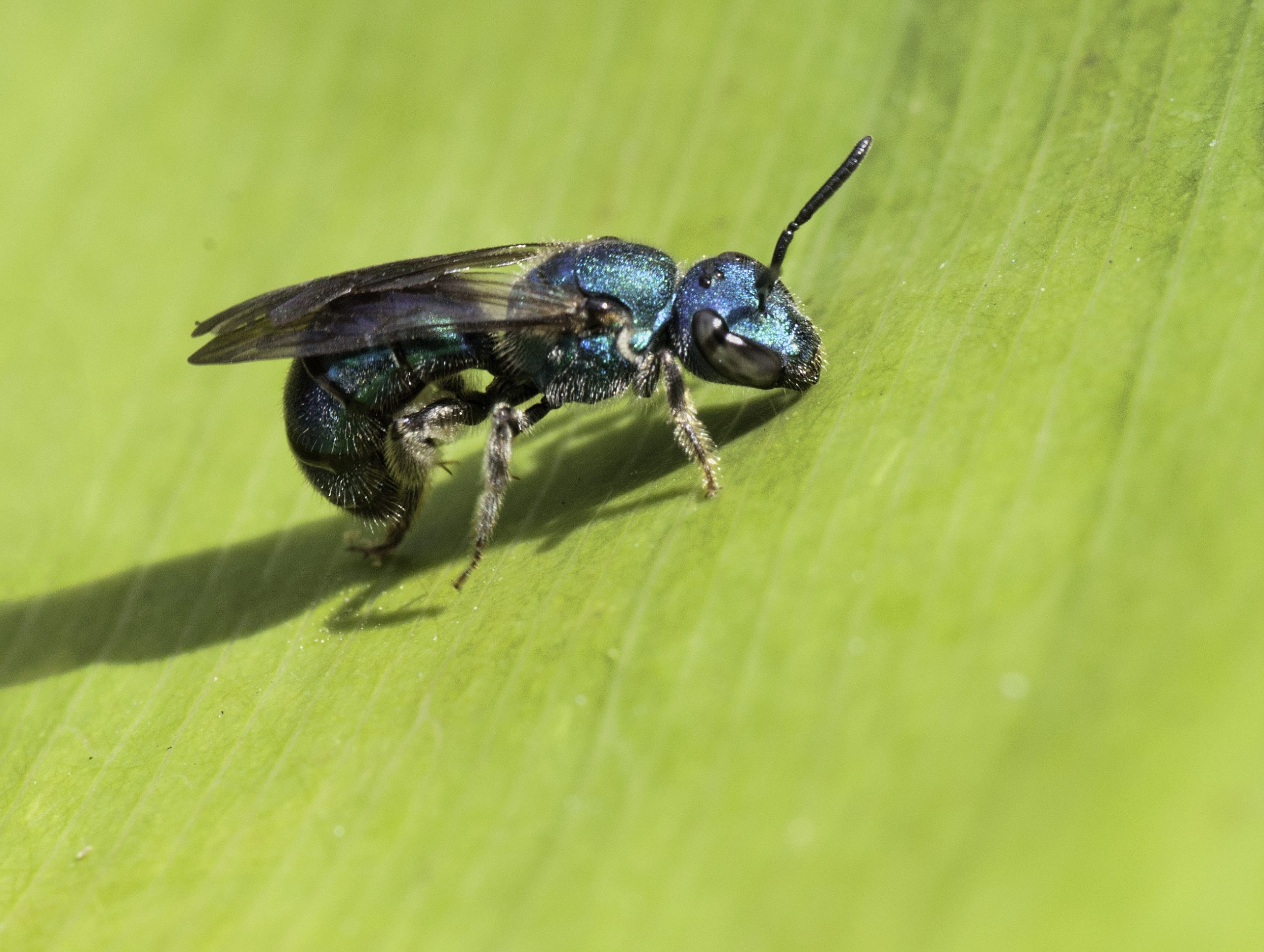
Sweat Bee
Tiny, some species less than half an inch, and often metallic green, though coloring varies by species. Named for their attraction to human perspiration, sweat bees will land on exposed skin to collect salt, which is harmless until one gets trapped or pressed against the skin, at which point they will sting. The sting is mild compared to most stinging insects but noticeable. They nest alone rather than in colonies, so there's no group defensive response to worry about. The sting risk is purely from the individual bug feeling cornered.
Types of Wasps You'll Find in SC & NC
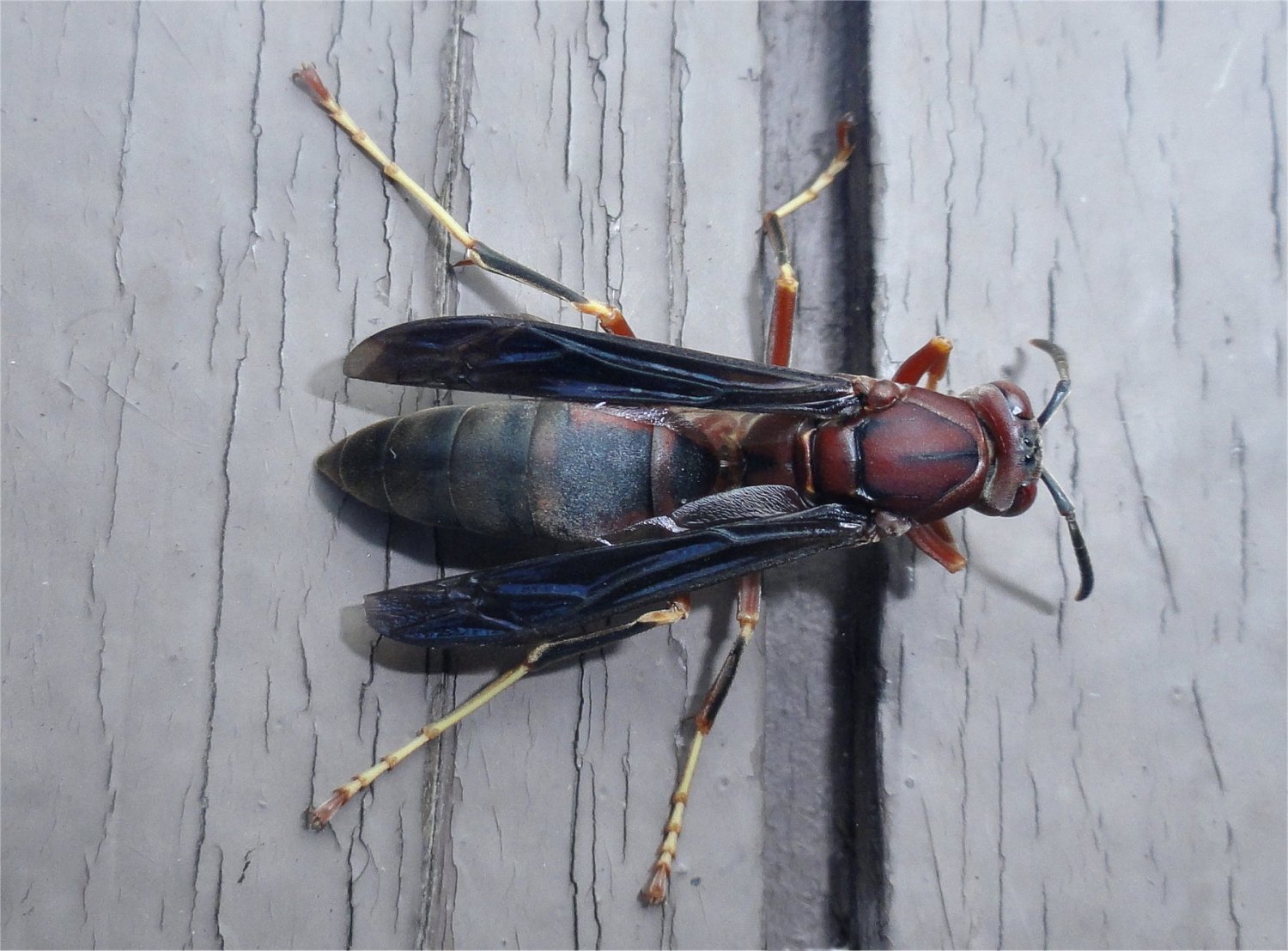
Paper Wasp
Slender and long-legged, paper wasps are often identified in flight by their legs dangling below them. They build open-celled, umbrella-shaped paper nests from chewed wood fiber, typically attached under eaves, porch ceilings, window frames, and door frames. Paper wasps live in colonies and will sting readily if the nest is touched or approached too closely, though they're defensive rather than aggressive and won't pursue far from the nest. Common throughout the Southeast, with populations especially high along coastal SC.
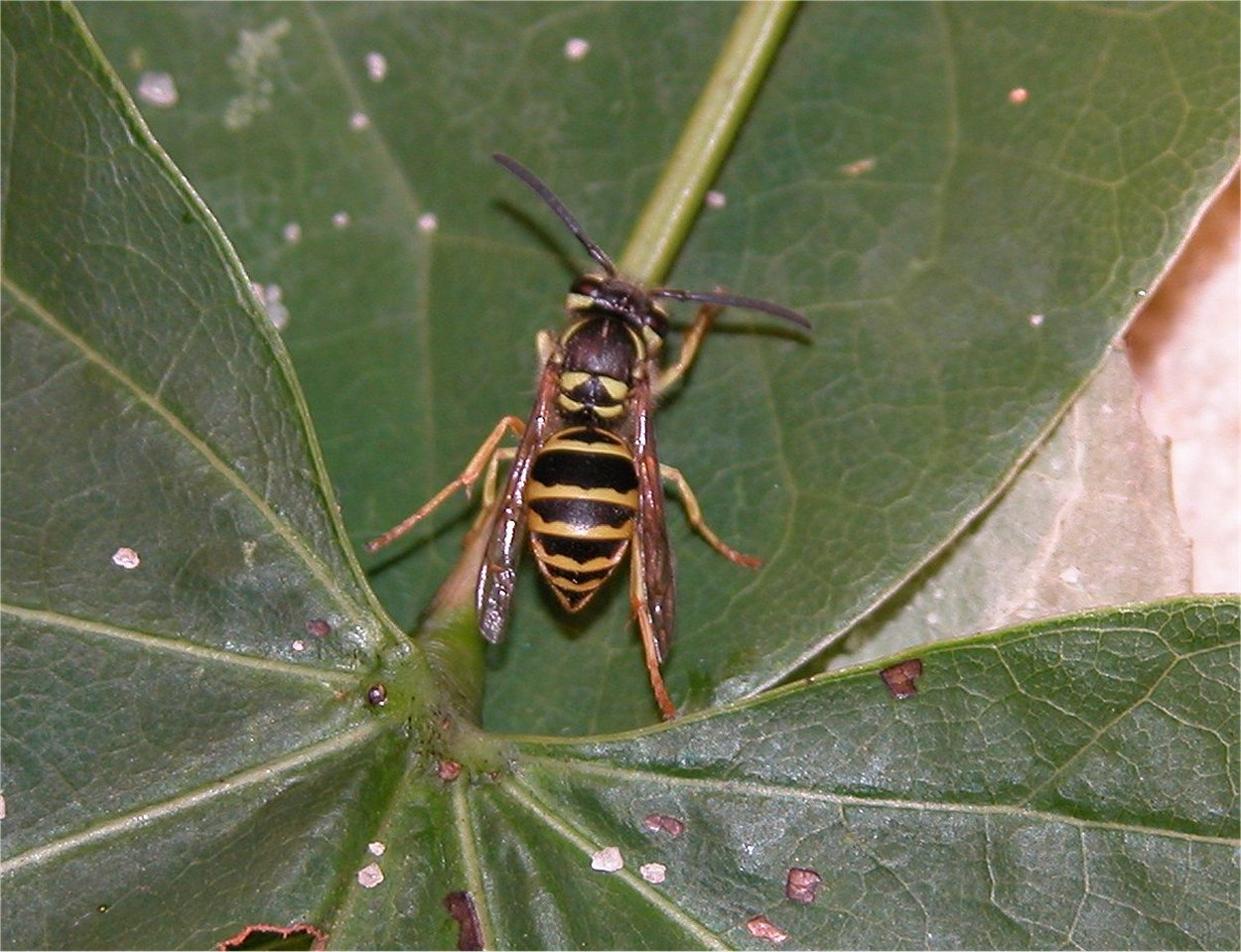
Yellow Jacket
Small, fast, and marked with bright black and yellow. Yellow jackets are the stinging insects most likely ruining your late-summer outdoor meal – they're scavengers in August and September, drawn to proteins and sweets. They live in large colonies and are the most aggressive stinging insect on this list, defending their nests with a coordinated group response. Most species nest underground or inside wall voids, which makes accidental disturbance easy and their defensive response severe. Yellow jackets are responsible for the majority of serious sting incidents in the Carolinas.
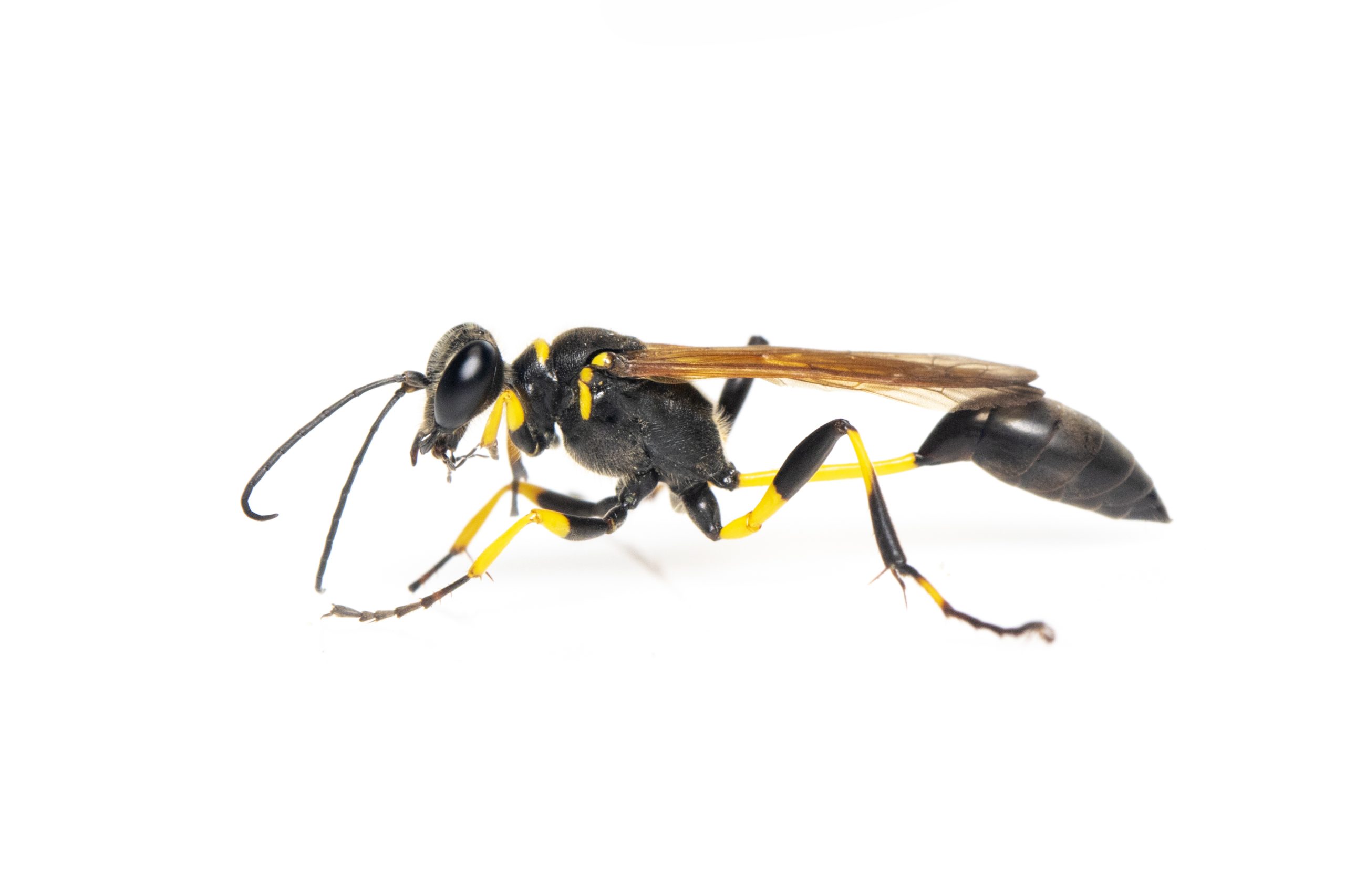
Mud Dauber
Easily recognized by a dramatically long, thread-thin waist. Mud daubers build their nests from mud in protected spots like garages, sheds, and under porches, forming clusters of cylindrical mud tubes. They nest alone rather than in colonies, which means there's nothing to collectively defend – mud daubers are almost entirely docile and rarely sting even when handled. They're actually beneficial, provisioning their nests with paralyzed spiders.
![][image25]
Great Black Wasp
The great black wasp (Sphex pennsylvanicus) is one of the most frequently misidentified stinging insects in SC and NC. It's large, typically 1 to 1.5 inches, with a deep, solid black body and wings that carry a distinctive blue-black iridescent sheen in direct light. It nests alone by burrowing into the ground to create nesting chambers rather than forming colonies, so it has no shared nest to defend and poses virtually no threat under normal conditions. It's also a valuable pollinator, particularly for wildflowers and native plants. If you're seeing a large, entirely black wasp flying low over your lawn or garden, the great black wasp is the most likely explanation and almost certainly not something that needs treatment.
The Only True Hornet in North America
![][image26]
European Hornet
The European hornet (Vespa crabro) is the only true hornet, genus Vespa, established in North America. It's large (workers reach about an inch, queens exceed that), brownish-yellow rather than the black-and-yellow most people picture, and builds paper nests inside protected cavities: hollow trees, attic spaces, wall voids, and old outbuildings. European hornets live in colonies and are defensive of the nest, though less reflexively aggressive than yellow jackets. They're also active at night, which catches homeowners off guard. They're drawn to porch lights and can fly well after dark. Per Clemson HGIC, colonies typically contain 200–400 workers.
When to Call a Professional
Most stinging insects that nest alone, great black wasps, mud daubers, mason bees, carpenter bees, can be managed with targeted treatment or, in many cases, left alone entirely. The calculation changes significantly with species that live in colonies.
Yellow jacket nests inside wall voids, large paper wasp nests near entryways, bald-faced hornet nests at head height, and European hornet nests inside the structure are all situations where professional removal is the right call. Colony-living species defend their nests as a group, and anyone with a venom allergy faces a genuine medical risk from a defensive swarm. Nest location, inside a wall, underground, or high overhead, often makes safe DIY access impossible regardless of the species.
Terminix Service, Inc. handles stinging insect identification, nest removal, and preventive treatment throughout SC and western NC. Request a free inspection and let a trained pest control technician confirm what you're dealing with before getting any closer.
Bees, Wasps & Hornets FAQs
Is a bald-faced hornet actually a hornet?
No, despite the name, the bald-faced hornet is a type of yellowjacket, not a true hornet; the European hornet is the only true hornet species established in North America.
Are great black wasps dangerous?
Not under normal conditions – they nest alone with no colony to defend and only sting if directly handled or deliberately provoked; they're also beneficial pollinators and generally worth leaving alone.
How can I tell a carpenter bee from a bumblebee?
Look at the abdomen: carpenter bees have a smooth, shiny, matte black abdomen, while bumblebees are fuzzy all the way around including the abdomen; the size and shape are similar, but that one difference is easy to spot up close.
Which stinging insect should I be most worried about?
Yellow jackets are responsible for the majority of serious sting incidents in the Carolinas; they live in large colonies, defend aggressively as a group, often nest in hidden locations like wall voids and underground.
Do mud daubers sting?
Rarely and almost never unprovoked, mud daubers nest alone with nothing to collectively defend and are considered one of the most docile stinging insects found in the Carolinas. Old mud nests left behind in garages and sheds are typically inactive.
What's the fastest way to tell a bee from a wasp?
Body hair: bees are fuzzy because they collect pollen and need that body hair to do it, while wasps are slender and smooth-bodied; if it's fuzzy and round, it's almost certainly a bee, and if it's narrow-waisted and smooth, it's almost certainly a wasp.
Why are yellow jackets so much more aggressive in late summer?
Yellow jacket colonies grow through the summer and reach peak population in August and September, when foragers also shift toward scavenging for protein and sugar rather than hunting.
Should I treat a great black wasp nest myself?
There's rarely a reason to, as great black wasps nest alone, are non-aggressive, and are beneficial pollinators; if one is burrowing in a lawn area that causes concern, a pest professional can confirm the species and advise, but treatment is almost never necessary.

