- How to Get Rid of Spider Mites
- What Are Spider Mites?
- Common Signs of a Spider Mite Infestation
- Getting Rid of Spider Mites: What Actually Works
- Can You Treat Spider Mites on Vegetable Gardens and Edible Plants?
- What Are the Tiny Red Mites on My Patio?
- Contact Terminix Service Today
- Spider Mites FAQs
How to Get Rid of Spider Mites
If you’ve noticed tiny bugs creeping across your plants or fine webbing forming on leaves, you might be dealing with spider mites. These small but destructive pests can cause real damage to your garden / and they tend to show up when you least expect them. The good news is there are practical steps you can take to get things under control, and Terminix Service, Inc. is here to help when you need backup.
What Are Spider Mites?
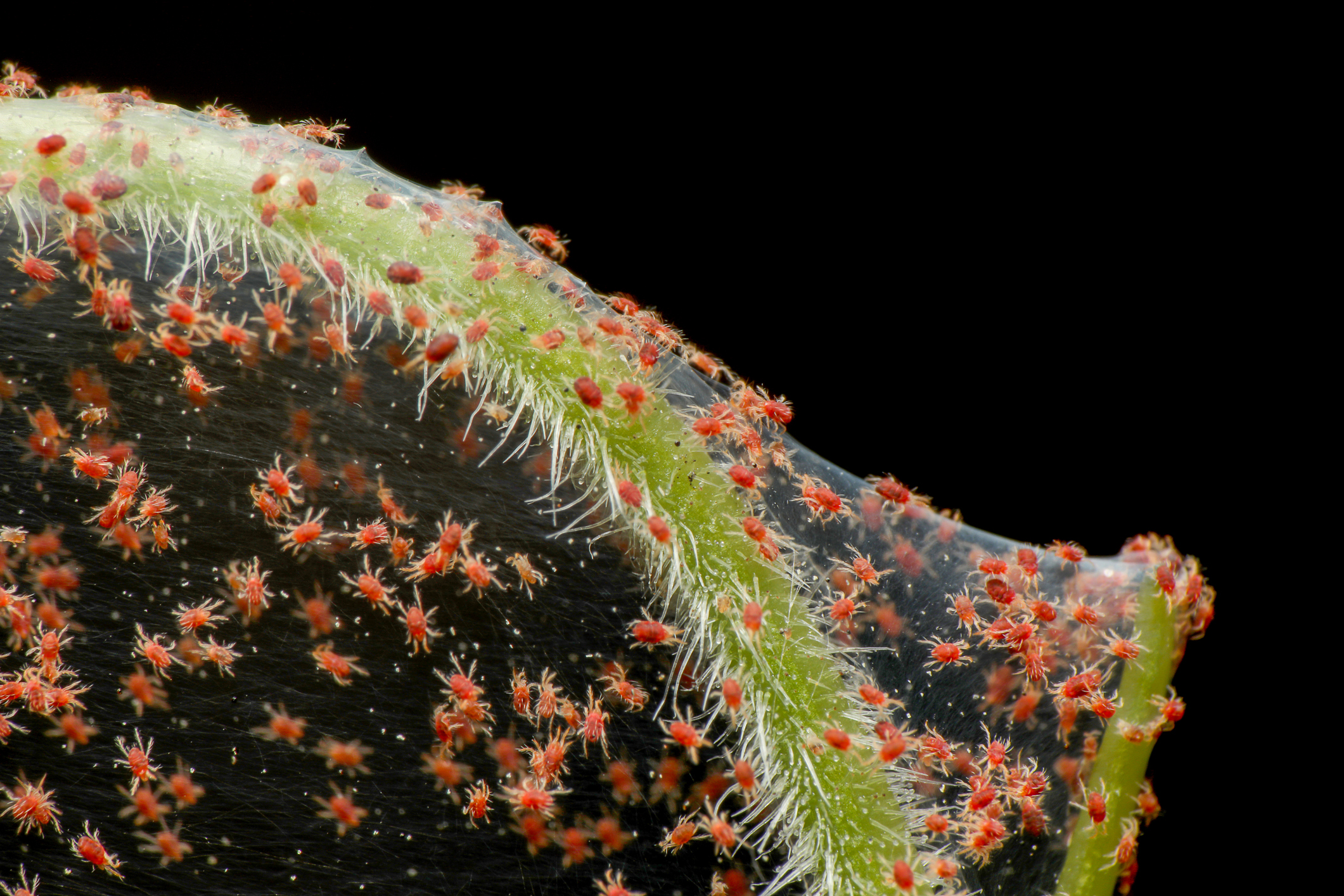
According to Kevin Hathorne, entomologist at Terminix Service, Inc., “spider mites are considered plant pests that can feed on and damage a variety of plant species.” They’re not insects / they’re arachnids, putting them in the same class as spiders and ticks.
They’re commonly found feeding on:
- Fruit trees and berry plants
- Vegetables and herbs
- Ornamental shrubs and flowers
- Vines and groundcover
The most common species / including the two-spotted spider mite, Pacific spider mite, and strawberry spider mite / behave similarly and are treated the same way, so identifying the exact species usually isn’t necessary.
Common Signs of a Spider Mite Infestation
Spider mites are tiny, but the damage they leave behind is easy to spot. Here’s what to watch for:
- Yellowing, stippled, or bronzed leaves
- Fine webbing on the undersides of leaves or between branches
- Dry or dusty-looking plant surfaces
- Leaves curling, wilting, or dropping early
- Tiny moving dots visible when you look closely at foliage
Hot, dry weather tends to speed things up. Spider mite populations can grow quickly when conditions are right, so catching them early makes a real difference.
Getting Rid of Spider Mites: What Actually Works
There’s no single fix / the right approach depends on how severe the infestation is and what plants are affected. Here’s a good order of attack:
- Start with water. A strong stream aimed at your plants / especially the undersides of leaves / can physically knock mites off and disrupt colonies. It’s low-cost and surprisingly effective when done consistently every few days.
- Try insecticidal soap or neem oil. Both suffocate mites on contact without harsh chemicals and are available at most garden centers. Apply thoroughly, focusing on the undersides of leaves, and repeat as directed on the label.
- Step up to a miticide if needed. For severe or widespread infestations, a miticide formulated specifically for mites can help knock back heavy populations. Follow label instructions carefully / especially near edible plants.
- Watch out for overspraying. Broad-spectrum pesticides can worsen spider mite problems by eliminating natural predators such as predatory mites and lacewings. If you’ve been spraying frequently and the problem keeps returning, that may be why.
Can You Treat Spider Mites on Vegetable Gardens and Edible Plants?
When it comes to edible plants like vegetable gardens, fruit trees, herb gardens, and ornamental shrubs, it’s always best to tread carefully with any treatments. Kevin suggests checking with your local garden center or county extension office / they can point you toward options that are safe for the specific plants you’re growing.
Terminix Service, Inc.’s exterior pest control treatments do cover vegetation near your home’s foundation, which can naturally help reduce activity from spider mites, aphids, mealybugs, and other common plant pests in those areas as part of the overall service.
What Are the Tiny Red Mites on My Patio?
This is one of the most common points of confusion Kevin sees this time of year. If you’re spotting tiny red bugs crawling across your patio, foundation wall, sidewalk, or deck / they’re almost certainly clover mites or concrete mites, not spider mites.
Kevin breaks down the difference:
- Clover mites feed on grasses and clover / not plants or people
- Concrete mites feed on tiny insects and pollen
- Neither type bites or causes any harm to humans or pets
- The red stain they leave when crushed is not blood / it’s simply their natural pigmentation
As Kevin puts it: “They are small and can wander inside, but will not survive long indoors… While these mites can be annoying this time of year, they are not harmful and will only be present for a few weeks before they go away on their own.”
Terminix Service, Inc.’s standard exterior pest control service covers roaches, spiders, silverfish and a variety of other pests that may become active with changes in the weather. For a particularly large infestation, a targeted treatment can be arranged. Kevin notes: “If you have regular pest control and need a special treatment for these types of mites, we will gladly do that for you. Simply call your local Terminix Service office to request it.”
Contact Terminix Service Today
When you notice unusual pest activity around your home’s foundation, or if you have questions about what’s going on in your yard, Terminix Service, Inc. is here to help. Our exterior pest control treatments keep your home protected year-round, and our team is always happy to answer questions and point you in the right direction.
Spider Mites FAQs
Does Terminix Service, Inc. treat spider mites as part of regular pest control?
Yes / Terminix Service, Inc.’s exterior pest control treatments include treating vegetation near your home’s foundation, which can help reduce spider mite activity on those plants.
What time of year are spider mites most active?
Spider mites thrive in hot, dry conditions and are most active in late spring through summer. Populations can grow quickly during dry stretches, but they will disappear on their own after a short period of time.
Can spider mites spread from plants to humans?
No / spider mites feed exclusively on plants and do not bite or affect humans or pets.
What are the tiny red mites on my patio?
Those are most likely clover mites or concrete mites, not spider mites. They’re harmless, do not bite, and typically disappear on their own within a few weeks.
How do I know if I have spider mites or something else?
Look for fine webbing on leaves, stippled or yellowing foliage, and tiny moving dots on plant surfaces. If you’re seeing red mites on hard surfaces like concrete or siding, those are more likely to be clover or concrete mites.

