- Stink Bugs in Your Home: What Attracts Them and How to Get Rid of Them
- Key Takeaways:
- What Attracts Stink Bugs to Your Home
- Types of Stink Bugs: Invasive vs. Native
- Stink Bugs in the Carolinas: A Fast-Growing Problem
- Do Stink Bugs Bite?
- How to Get Rid of Stink Bugs (Without Making It Worse)
- One Season of Stink Bugs Is Enough
- Stink Bug FAQs
Stink Bugs in Your Home: What Attracts Them and How to Get Rid of Them
If you've noticed more stink bugs in your SC or NC home lately, you're not imagining it. The invasive brown marmorated stink bug first showed up in the Carolinas around 2009, and it's been spreading steadily since – from Asheville and Charlotte down through Greenville and Spartanburg and into communities across the Upstate. What started as a nuisance in a handful of western NC counties has become a fall reality for homeowners across most of both states. Here's what draws them in, how to tell them apart from harmless native species, and why vacuuming, not spraying, is the right call once they're already inside.
Key Takeaways:
- Stink bugs are drawn to warmth and light in fall as temperatures drop – your home is essentially their target overwintering site.
- The brown marmorated stink bug is the invasive species behind most home-invasion complaints in the Carolinas; native species like the green stink bug are largely outdoor agricultural pests.
- Stink bugs do not bite, sting, or transmit disease. They're a nuisance pest, not a health risk.
- Do not spray an active indoor infestation as dead stink bugs in attics and wall voids attract secondary pests and smell bad; vacuuming is the right approach.
What Attracts Stink Bugs to Your Home
Stink bugs aren't looking for your food or your water, they're looking for warmth. As temperatures drop in early fall, brown marmorated stink bugs begin searching for a protected place to spend the winter. Your home is exactly what they're after.
A few specific things draw them in:
- Light – stink bugs are attracted to light sources, which is why they often congregate around windows, doors, and porch lights in the evening
- Warmth – the heat radiating from your home's exterior on a cool fall day is enough to pull them in
- Entry points – roofline gaps, torn screens, cracks around windows and doors, and unsealed utility penetrations are the access points they use; openings around the roofline are particularly common entry points
Once inside, they make their way into attics and wall voids where they stay dormant through the winter. They don't feed or reproduce indoors – they're just waiting out the cold.
Types of Stink Bugs: Invasive vs. Native
Not every stink bug you encounter is the same, and the distinction matters.
Brown Marmorated Stink Bug (BMSB)
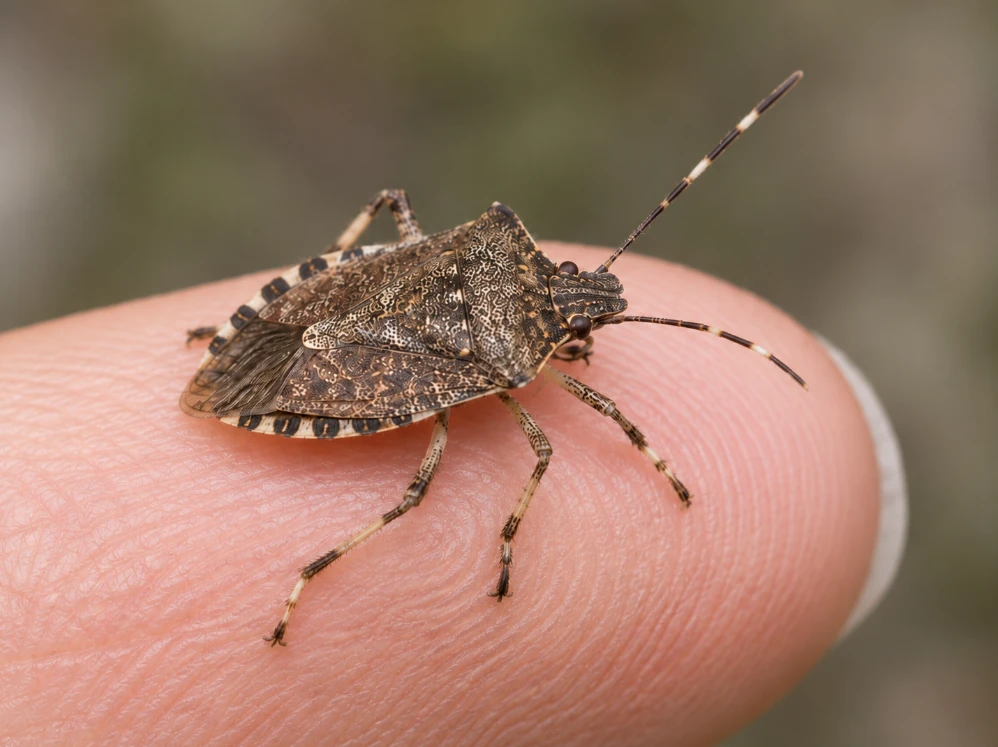
This is the invasive species responsible for almost every "stink bugs swarming my house" complaint in the Carolinas. Originally from Asia, it arrived in the U.S. in the late 1990s and has been spreading steadily since. It's brown and shield-shaped, roughly ¾ of an inch long, with alternating light and dark bands on the edges of its abdomen. This is the species that overwinters in homes in large numbers.
Native Species (Green Stink Bug and Others)
Several native stink bug species exist in SC and NC, including the green stink bug. These are primarily outdoor pests that feed on crops, fruits, and garden plants. They don't typically swarm into homes the way BMSB does. If you're finding large numbers of stink bugs inside your house in fall, it's almost certainly the brown marmorated species.
Stink Bugs in the Carolinas: A Fast-Growing Problem
The brown marmorated stink bug was first detected in North Carolina in Forsyth County near Winston-Salem in 2009. Since then its spread has been significant – NC State Extension confirms the species is now present in 80 of the state's 100 counties as of February 2025.
In South Carolina, BMSB arrived around 2011 and has spread statewide. Clemson University entomologists have documented a particularly notable population surge in South Carolina's Upstate, the same general area as much of Terminix Service, Inc.'s SC service territory, linking the heavier activity there to longer, warmer falls that give the bugs more time to feed and reproduce before they begin seeking shelter for winter.
For homeowners in both states, this means stink bug pressure has grown meaningfully over the past decade and a half, and it's not a problem unique to a few homes or neighborhoods anymore.
Do Stink Bugs Bite?
No. Stink bugs are not a health risk. Their mouthparts are designed for piercing plant tissue, not skin, and they don't bite, sting, or transmit disease. The only real downside of a stink bug, beyond the nuisance of having them in the house, is the odor they release when disturbed or crushed. The smell is their defense mechanism, not a danger.
How to Get Rid of Stink Bugs (Without Making It Worse)
The instinct when you have a large number of stink bugs inside is to reach for a spray. This is worth resisting, and here's the specific reason why: treating an active indoor infestation with pesticide kills large numbers of stink bugs in your attic and wall voids where you can't reach them. Dead stink bugs in walls decompose, smell bad, and attract secondary pests like carpet beetles that feed on the carcasses.
The better approach, as Kevin Hathorne explains in detail in the Ask the Entomologist series:
- Vacuum them as they emerge – stink bugs don't all come out at once but gradually over a couple of weeks in spring as temperatures rise; vacuum them as they appear and dispose of the bag immediately, or drown collected bugs in soapy water
- Don't crush them – crushing releases the defensive odor; the vacuum avoids this
- After they've fully emerged – use the window between late spring and early fall to seal the entry points they used: repair damaged areas around the roofline, seal cracks and gaps, secure eave and gable vents, and have your attic treated with an insecticidal dust by a pest professional as a preventative measure for the following fall
- Communicate with your technician – let your Terminix Service, Inc. professional know stink bugs have been a problem so a preventative fall treatment can be scheduled before they try to come back inside
One Season of Stink Bugs Is Enough
Stink bugs are manageable, but sealing entry points and getting professional preventative treatment in the attic before fall is what stops the same problem from repeating year after year. Terminix Service, Inc. has been protecting SC and western NC homes for over 75 years. Your inspection is free, your technician is local, and your results are guaranteed. Request yours today.
Stink Bug FAQs
Why do I only see stink bugs in fall and spring?
They enter homes in fall looking for a place to overwinter, then try to find their way back outside in spring once temperatures rise, often getting confused and ending up in living spaces instead of back outside.
Should I vacuum or spray stink bugs?
Vacuuming is a better option. Spraying an active indoor infestation leaves large numbers of dead stink bugs in attics and wall voids, which attract secondary pests like carpet beetles and cause a persistent odor as they decompose.
Are all stink bugs the same species?
No, the brown marmorated stink bug is the invasive species behind most home-invasion complaints in the Carolinas, while several native species like the green stink bug exist as well and are primarily outdoor garden and agricultural pests that don't typically swarm into homes.
How did stink bugs end up in the Carolinas?
The brown marmorated stink bug is native to Asia and arrived in the U.S. in the late 1990s, likely as a stowaway in shipping containers; it was first detected in North Carolina in 2009 and has since spread to 80 of the state's 100 counties.
Do stink bugs cause any damage to my home
No structural damage; stink bugs don't eat wood, chew through materials, or nest destructively; the main concern with a large indoor infestation is odor, and the secondary pest problem that can result from spraying and leaving large numbers of dead bugs in wall voids.
Is the smell from stink bugs harmful?
The odor is unpleasant but not toxic, it's a defensive secretion, not a venom or irritant, and poses no health risk beyond being very difficult to get out of fabric and soft materials if a bug is crushed indoors.
When is the best time to seal entry points against stink bugs?
Late spring through early summer, after the bugs that overwintered in your home have fully emerged and before the next generation begins looking for shelter in fall; sealing roofline gaps, torn screens, and cracks during this window is the most effective timing.
Can Terminix Service prevent stink bugs from coming back next fall?
Yes, a professional attic treatment with insecticidal dust, scheduled in fall before temperatures drop significantly, is the most effective preventative measure; let your Terminix Service, Inc. technician know stink bugs have been a recurring issue so the timing and treatment can be planned accordingly.

