Terminix Service, Inc., the largest pest control company in the Palmetto State, has been named one of the Best Places To Work in South Carolina for the seventh year in a row by the South Carolina Chamber of Commerce,SC Biz News and the Best Companies Group. The survey and awards program was designed to identify, recognize, and honor the best employers in the state of South Carolina benefiting the state’s economy, workforce, and businesses.
“We are grateful to be named a top workplace in South Carolina for the seventh year in a row. This recognition is particularly special because it’s based on feedback from our employees,” said Lex Knox, chairman and CEO. “2020 has been a year unlike any other in our 73 year company history, yet our commitment to delivering quality service through a highly-skilled team remains constant. We will continue to empower our people and invest in their continued career growth.”
Companies from across the state entered the two-part survey process to determine the Best Places to Work in South Carolina. The first part consisted of evaluating each nominated company’s workplace policies, practices, philosophy, systems, and demographics. The second part consisted of an employee survey to measure the employee experience. The combined scores determined the top companies and the final ranking. For more information, visit www.bestplacestoworksc.com.
Curious about what makes a career with Terminix so special? Ride along with our employees in the video below to learn why this is more than a job, it’s a passion that they get to do everyday.
Interested in joining the Terminix family? Check out our career page for the latest openings and opportunities.
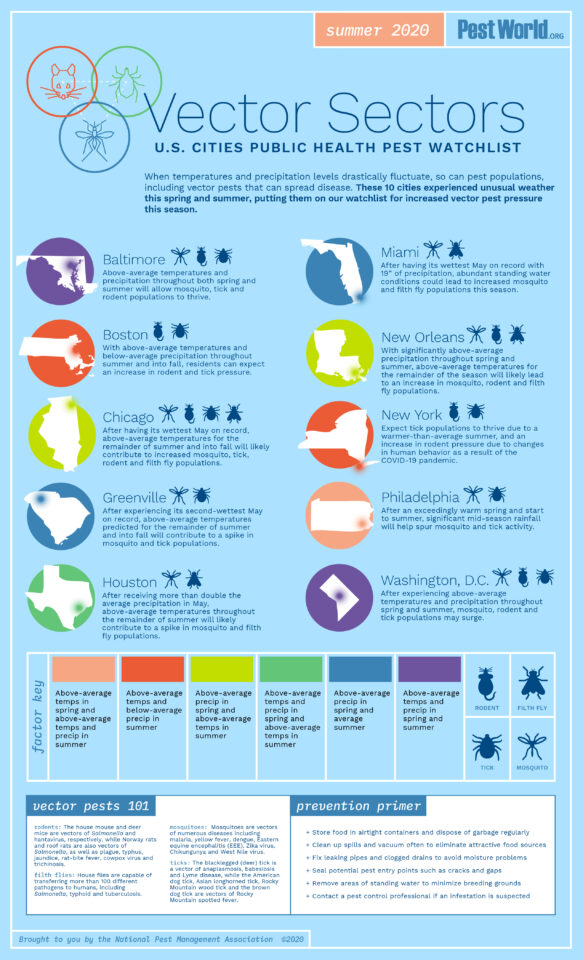
Already a hospitable environment for ticks and mosquitoes, Greenville experienced its second-wettest May on record and has continued to have higher than normal temperatures throughout the summer. Because of this, the area should expect to see an increase in both mosquito and tick pressure as the weather continues to remain hot into the fall.
“Each season, we keep a close eye on the weather and implications it has on pest management,” shares Kevin Hathorne, technical director of Terminix Service, Inc. “With heightened conditions this year and the desire to spend more time outdoors socially distancing, it’s important for the public to be aware of vector pests and how to guard against them.”
Vector pest prevention measures include:
Apply bug repellent containing at least 20 percent DEET
Wear long sleeves and pants when outdoors
Wear light-colored clothing to make pests more visible
Remove areas of standing water to minimize breeding
Contract a licensed pest control professional if an infestation is suspected
Mosquitoes and ticks are vector pests, meaning that they can carry diseases and pose a public health threat. The good news is that there is no evidence that mosquitoes can transmit COVID-19. While Terminix cannot guarantee the elimination of pests carrying diseases such as Lyme Disease and West Nile Virus, these measures can reduce the chances of bites occurring. For more information on mosquito and tick management services, visit this page for a free quote and to find your local branch or call 1-800-TERMINIX.
To mark the official beginning of Summer, Terminix Service, Inc., the nation’s tenth-largest pest control company, unveils the top 15 cities in the Carolinas and Central Savannah River Area where mosquitoes will be most prevalent.
“Mosquitoes are inevitable this time of year and we encourage everyone to be proactive in protecting themselves from mosquito-borne illness by reducing the mosquito population in their yard,” shares Kevin Hathorne, technical director of Terminix Service, Inc. “In addition to minimizing standing water around your home, it’s important to get your yard professionally treated throughout the summer.”
According to mosquito service calls, the top three metros with the most mosquito activity this season are Columbia, S.C., Charlotte, N.C., and Mount Pleasant, S.C. The entire top 15 list includes:
Columbia
Charlotte
Mount Pleasant
Harrisburg
Greenville
Bluffton
Rock Hill
Seneca
Asheville
Statesville
Georgetown
Florence
Charleston
Myrtle Beach
Sumter
In addition to ruining outdoor barbeques, mosquitoes are a public health threat due to their ability to carry diseases. The good news is that there appear to be no signs that mosquitoes can carry and transmit COVID-19.
“There is no evidence that mosquitoes can transmit COVID-19,” said Hathorne. “However, mosquitoes are known vector pests, which means that they can still carry diseases such as West Nile and Zika viruses.”
Hathorne says steps to reducing mosquitoes include:
Disposing of old tires, buckets, drums, bottles, or any water-holding containers.
Cleaning debris from rain gutters, ditches, culverts, and outdoor drains so water can flow properly.
Ensuring swimming pools and ornamental ponds are properly maintained and that water in birdbaths, plant pots or drip trays is emptied and replaced after every rainfall.
Checking around outdoor faucets, air conditioner units, and repairing leaks.
Filling in tree holes and hollow stumps that hold water with sand or concrete.
Keeping grass cut and shrubs well trimmed where adult mosquitoes may rest.
Sealing out mosquitoes by ensuring windows and door screens are in good condition.
Wearing light-colored clothing, long sleeve shirts, and long pants when possible.
Using personal insect repellents that contain at least 20% DEET.
While Terminix cannot guarantee customers will not get bitten by mosquitoes or contract a mosquito-borne illness, by significantly reducing the mosquito population in a given area, everyone can reduce the chances of bites occurring. For more information on mosquito management services, visit www.TrustTerminix.com or call 1-800-TERMINIX.
Kevin Hathorne, technical director and board certified entomologist for Terminix Service, Inc., the ninth largest pest control company in the U.S., answers the questions that bug us all the most.
Q: We have eight mouse traps set in our house. The mice seem to only come in the kitchen but we don’t know where they are coming from. They eat the peanut butter we put as bait but won’t set the trap off. Do you recommend any other options to get rid of them? How do exterminators get rid of mice?
A: It is important to remember that recommendations will vary depending on the severity of the issue. In order to determine the severity, you need to know the species you have and be familiar with the environment they are in (your home). Simply setting out traps usually does not work. This may capture some individuals but may not solve the issue. Rodents are smart and will avoid traps in search of more desirable foods. Sanitation and exclusion (sealing all potential entry points) are also necessary components of rodent control.
My best advice is to seek help from a reputable pest control company. A pest professional can inspect your home and determine the best methods of control. To schedule a pest inspection with Terminix, simply call 1-800-Terminix.
Have a question that keeps bugging you? Click the button below to connect with our experts. You just might see your question in a future “Ask the Entomologist” feature.
Kevin Hathorne, technical director and board certified entomologist for Terminix Service, Inc., the ninth largest pest control company in the U.S., answers the questions that bug us all the most.
Q: Something keeps biting my family and I in our house but doesn’t seem to affect my cat. Any thoughts on what it might be?
A: There are many things that can cause skin irritations that may be perceived to be insect bites, but can be caused by something else. A thorough inspection by a reputable pest professional will confirm or rule out possible arthropod infestations. Sometimes this may take a few days as monitors may need to be placed and then collected after a couple of days to see if anything is present. There is a short list of possible biting arthropods that can be ruled out upon inspection. Here is an example of the most common biting arthropods:
Fleas – bites will be mostly on the legs and ankles.
Bed bugs – bed bug bites are typically only on exposed skin when sleeping. Signs of bed bugs can be seen near where the person sleeps (blood spots, fecal spots, caste skins, etc.)
Bird or Rodent Mites – bites usually on arms and legs and only occur near bird or rodent nest locations.
Outdoor pests like thrips, biting midges, mosquitoes, etc. – bites occur on exposed skin and after being outside.
Once these have been ruled out then other non-pest causes need to be explored. Other causes may be scabies mites (treated by a doctor), allergic reactions, environmental stresses, or reactions to medications. We would suggest consulting with your family doctor or dermatologist for help on these.
Feel free to contact a local Terminix pest professional by calling 1-800-Terminix and schedule a free pest inspection. Keep in mind that if a biting arthropod infestation is not found during the inspection, getting the house treated “just in case” will not solve the problem.
Have a question that keeps bugging you? Click the button below to connect with our experts. You just might see your question in a future “Ask the Entomologist” feature.
Kevin Hathorne, technical director and board certified entomologist for Terminix Service, Inc., the ninth largest pest control company in the U.S., answers the questions that bug us all the most.
Q: I have rice weevils and am wary of having a pest professional treat, as I attempt to social distance due to COVID-19. Do you have suggestions for treating on my own?
A: When dealing with rice weevils, the only way to get them under control is to eliminate the food source(s). I understand you already identified some bird seed in the garage as one source and have disposed of it. If you’re still finding weevils inside the home there may be additional items infested. Thoroughly examine all stored food products, especially in places where the weevils are being found. If you think you have discarded all infested products, it may just take some time for the remaining weevils to eventually die off. Be sure to also check places where food materials may have been spilled. We have found that spilled food such as dog food, rice, nuts, etc. underneath appliances and cabinets can support an infestation.
I would discourage you from spraying any pesticides to try and get rid of them as this will not help, and only add unnecessary pesticides into your environment. A safer way to remove weevils and other types of pantry pests that are found would be to use a vacuum.
To learn more about the proactive measures our team has taken to ensure your safety and the continued treatment of your home, read here about our commitments..
Have a question that keeps bugging you? Click the button below to connect with our experts. You just might see your question in a future “Ask the Entomologist” feature.
As a family-owned business, the health and wellbeing of our Terminix Service, Inc. family is top priority. Service is literally part of our name, and we are committed to providing our services that protect your family and property.
Because of our commitment to you, and the safety standards our employees maintain, we’ve been able to continue service without interruption. This is crucial especially this time of year, when pest activity is on the rise.
In most cases, our pest, termite and mosquito services can be performed with little to no human contact. For our regular pest control customers, our desire is to prevent pest activity by building a barrier around your home, and we will continue to focus on exterior treatments at this time. If you are experiencing an urgent problem inside, please let our team know and we will do our best to treat the issue while following current public health protocols.
We are here to protect your home and family, and we are grateful for the opportunity to serve you—after all, our employees are also your neighbors. Please check TrustTerminix.com or follow our social channels to stay up to date as we navigate this evolving situation. Thank you for being part of our Terminix family.
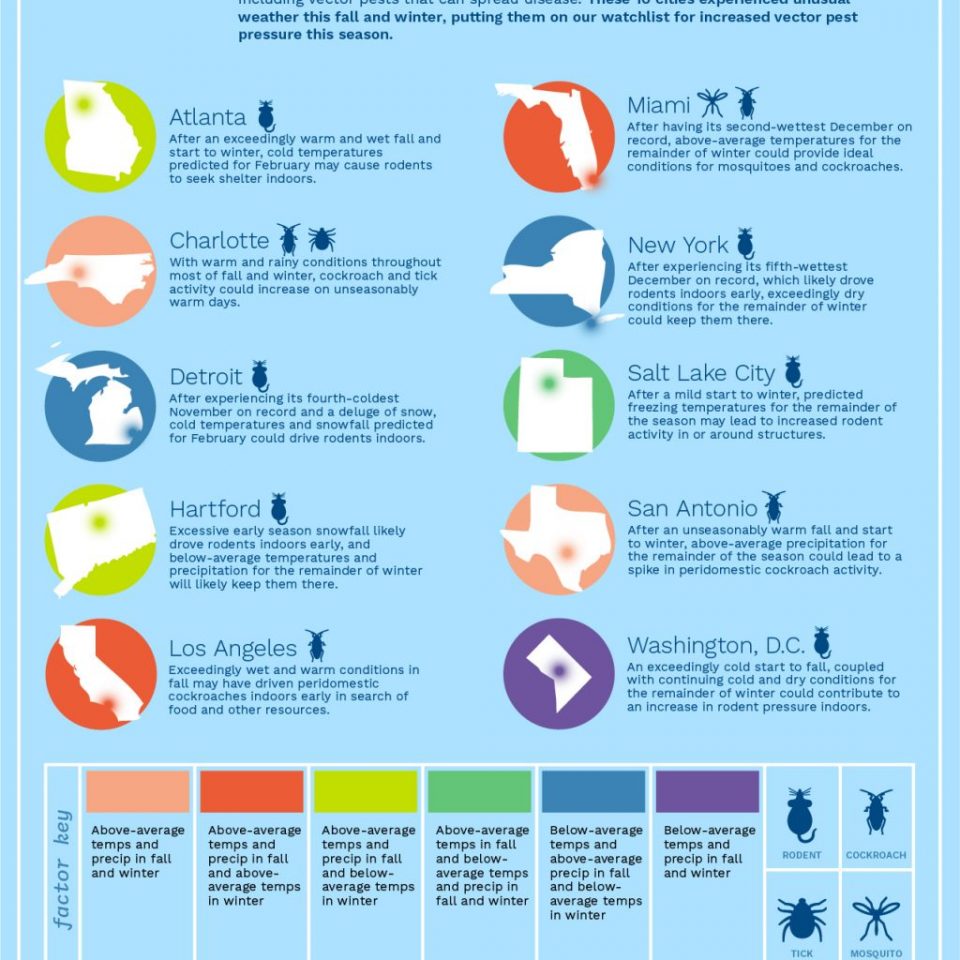
If you’ve been wondering where Winter is, you aren’t the only one. The National Pest Management Association (NPMA) recently released their bi-annual Vector Sectors list and the results show unusual pest trends in the ten cities identified.
Among those in the top 10 is Charlotte, N.C. According to the NPMA, due to an abnormally warm winter, Charlotte pest control professionals should be prepared for an increase in the presence of ticks and cockroaches for the remainder of the winter and into spring.
From the release, here is their take on the pending increased pest pressure for Charlotte:
Charlotte: With warm and rainy conditions throughout most of fall and winter, cockroach and tick activity could increase on unseasonably warm days.